
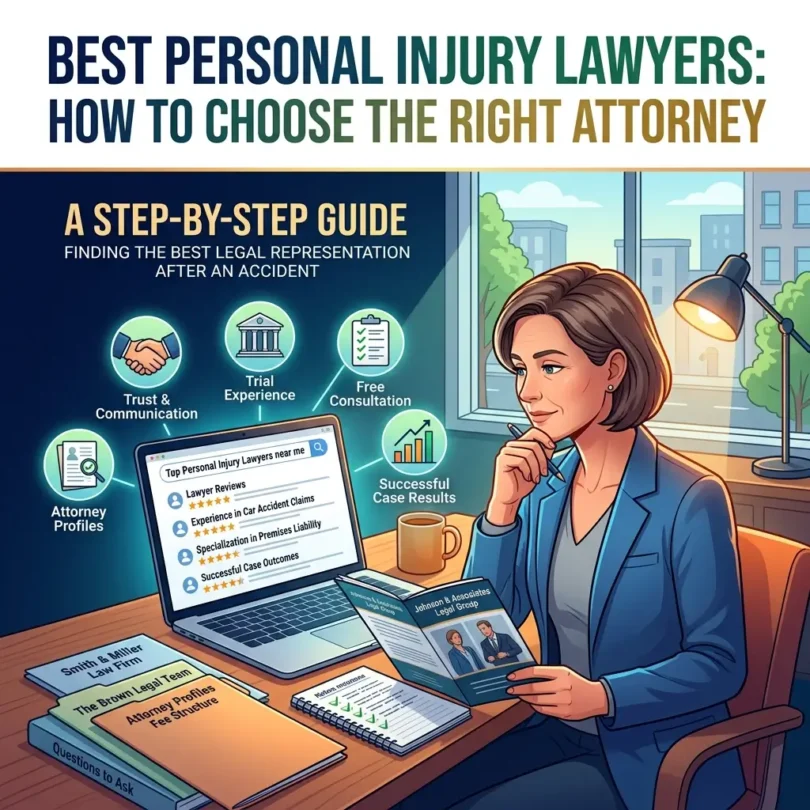

Choosing the best personal injury lawyer can make a serious difference after an accident, injury, or negligence-related claim.
When someone is hurt because of a car crash, slip and fall, workplace accident, unsafe product, medical error, dog bite, trucking accident, or another harmful event, the situation can become stressful very quickly. There may be hospital bills, lost income, pain, insurance calls, paperwork, evidence problems, and pressure to accept a quick settlement.
A good personal injury attorney helps injured people understand their rights, organize evidence, deal with insurance companies, calculate damages, negotiate settlements, and file a lawsuit if needed.
Personal injury cases are often handled through a contingency fee arrangement. The American Bar Association explains that in a contingent fee arrangement, the client pays the lawyer only if the case is handled successfully, and this arrangement is commonly used in cases where money is being claimed, especially personal injury and workers’ compensation matters.
This guide explains how to choose the best personal injury lawyer, what qualities to look for, what questions to ask, how attorney fees usually work, what red flags to avoid, and how to compare law firms before signing an agreement.
Important Legal Disclaimer
This article is for general informational purposes only. It is not legal advice and does not create an attorney-client relationship.
Personal injury laws, deadlines, damages, filing rules, and attorney fee rules vary by location and case type. Always consult a qualified attorney licensed in your state or country before making legal decisions.
What Is a Personal Injury Lawyer?
A personal injury lawyer is an attorney who represents people who were harmed because of another person, company, property owner, driver, employer, manufacturer, medical provider, or organization’s actions or negligence.
Personal injury lawyers commonly handle cases involving:
- Car accidents
- Truck accidents
- Motorcycle accidents
- Bicycle accidents
- Pedestrian accidents
- Slip and fall injuries
- Workplace injuries
- Medical malpractice
- Nursing home injuries
- Dog bites
- Unsafe products
- Wrongful death claims
- Construction accidents
- Premises liability
- Rideshare accidents
- Burn injuries
- Brain injuries
- Spinal cord injuries
- Catastrophic injuries
The goal of a personal injury claim is usually to seek compensation for losses such as medical treatment, lost wages, pain, suffering, long-term care, reduced earning ability, property damage, and other harm connected to the injury.
Why Hiring the Right Personal Injury Lawyer Matters
Not every injury case is simple.
Insurance companies may dispute liability, question medical treatment, argue that the injury was pre-existing, offer a low settlement, delay the claim, or pressure the injured person into signing too early.
The right lawyer can help by:
- Investigating the accident
- Preserving evidence
- Collecting medical records
- Speaking with witnesses
- Reviewing police reports
- Handling insurance communication
- Estimating case value
- Negotiating settlement offers
- Working with experts
- Filing legal documents
- Preparing for trial if needed
- Protecting deadlines
A weak lawyer may accept a poor settlement, miss important evidence, communicate poorly, or fail to prepare the case properly.
The best personal injury lawyer is not always the one with the biggest advertisement. The best choice is usually the attorney with relevant case experience, strong communication, transparent fees, a clear strategy, and a record of handling cases similar to yours.
Best Personal Injury Lawyers: What Makes an Attorney a Strong Choice?
A strong personal injury lawyer should have a mix of legal skill, negotiation ability, trial readiness, client service, and case-specific experience.
Here are the most important qualities to look for.
1. Experience With Your Specific Injury Type
Personal injury law is broad. A lawyer who handles simple car crash claims may not be the best choice for a complex medical malpractice or catastrophic injury case.
Ask whether the attorney has experience with cases like:
- Rear-end crashes
- Trucking accidents
- Workplace injuries
- Surgical errors
- Birth injuries
- Brain injuries
- Spinal injuries
- Wrongful death
- Defective products
- Slip and fall claims
- Insurance disputes
A lawyer with direct experience in your case type may better understand evidence, common defenses, expert needs, medical documentation, and settlement value.
2. Strong Track Record
A lawyer’s past results do not guarantee future results. Still, experience with settlements, verdicts, and complex claims can show whether the attorney knows how to handle serious cases.
Look for signs such as:
- Years handling injury cases
- Case results listed with proper disclaimers
- Trial experience
- Settlement negotiation experience
- Experience against insurance companies
- Experience with severe injury claims
- Recognition from legal organizations
- Client testimonials
- Peer reviews
- Professional discipline history check
Be careful with exaggerated promises. No ethical attorney should guarantee a specific result.
3. Clear Fee Agreement
Many personal injury lawyers work on contingency fees.
The Federal Trade Commission explains that contingency fee arrangements may involve a percentage of the amount recovered, and consumers may be able to negotiate fee structures depending on how much work the lawyer will do and whether the case settles quickly or goes to trial.
The ABA also explains that a contingent fee usually means the lawyer receives a fixed percentage of the recovery, often one-third to 40 percent, and if the client loses, the attorney does not receive a fee for the work done on the case.
Before signing, ask:
- What percentage does the lawyer charge?
- Does the percentage change if the case goes to trial?
- Who pays case costs?
- Are costs deducted before or after the attorney fee?
- What happens if the case is lost?
- Will the fee agreement be in writing?
- Are expert witness costs included?
- Are court filing fees included?
- Are medical record costs included?
The ABA Model Rules state that a lawyer must not make an agreement for, charge, or collect an unreasonable fee or unreasonable expenses.
4. Trial Readiness
Most personal injury cases settle before trial, but settlement value can depend on whether the lawyer is truly prepared to take the case to court.
Insurance companies may treat a case differently if they know the attorney is willing and able to try it.
Ask:
- Do you take personal injury cases to trial?
- How often do you litigate cases?
- Who will handle court filings?
- What happens if settlement offers are too low?
- Do you have courtroom experience?
- Will you personally handle my case?
A lawyer who never prepares for trial may have less leverage during negotiations.
5. Strong Communication
One of the biggest complaints people have about lawyers is poor communication.
A good personal injury lawyer should explain:
- What happens next
- How long the case may take
- What documents are needed
- What deadlines matter
- What settlement offers mean
- What risks exist
- Who will communicate with you
- How often updates will be provided
Before hiring, notice how the office treats you.
Do they answer questions clearly? Do they rush you? Do they explain fees? Do they pressure you? Do they return calls? Do they make unrealistic promises?
Good communication is not optional. It is part of good representation.
6. Resources to Build the Case
Some injury cases require serious resources.
A complex case may involve:
- Medical experts
- Accident reconstruction experts
- Vocational experts
- Life care planners
- Economic loss analysis
- Engineering experts
- Product safety experts
- Medical record review
- Depositions
- Court filings
- Expert reports
A small case may not need all of this. But serious injury claims often require investment.
Ask whether the firm has the ability to advance case costs and hire experts when needed.
7. Good Reputation and Professional Standing
Before hiring a personal injury lawyer, check reputation carefully.
You can review:
- State bar profile
- Disciplinary history
- Client reviews
- Peer reviews
- Case results
- Professional memberships
- Local reputation
- Referral sources
- Trial lawyer associations
- Legal directory profiles
USA.gov notes that people looking for legal help can find free or low-cost attorney resources through programs and organizations that provide legal assistance.
If you cannot afford a private attorney or your case is not accepted by contingency-fee lawyers, legal aid resources may help in certain civil matters. The Legal Services Corporation also provides a directory to help people find LSC-funded legal aid organizations near them.
Types of Cases Personal Injury Lawyers Handle
Car Accident Claims
Car accident cases are among the most common personal injury claims.
A lawyer may help with:
- Fault disputes
- Police reports
- Insurance communication
- Medical records
- Lost wages
- Pain and suffering
- Vehicle damage
- Uninsured driver claims
- Hit-and-run claims
- Settlement negotiation
Truck Accident Claims
Truck accident cases can be more complex than ordinary car crashes.
They may involve:
- Trucking companies
- Commercial insurance policies
- Driver logs
- Maintenance records
- Federal trucking rules
- Cargo loading issues
- Multiple responsible parties
Slip and Fall Claims
Slip and fall cases usually involve premises liability.
The injured person may need to show that a property owner knew or should have known about a dangerous condition and failed to fix it or warn people.
Medical Malpractice Claims
Medical malpractice cases are usually complex and may require expert testimony.
These cases may involve:
- Surgical errors
- Misdiagnosis
- Delayed diagnosis
- Medication errors
- Birth injuries
- Hospital negligence
- Failure to treat
Workplace Injury Claims
Workplace injuries may involve workers’ compensation, third-party claims, construction site injuries, equipment failures, or unsafe work conditions.
Product Liability Claims
Product injury claims may involve defective design, manufacturing defects, poor warnings, unsafe products, or recalled items.
Wrongful Death Claims
Wrongful death claims are brought after a person dies because of another party’s wrongful act or negligence. These cases are highly sensitive and require experienced legal guidance.
How to Choose the Best Personal Injury Lawyer
Use this step-by-step process.
Step 1: Identify Your Case Type
Before searching, understand what type of claim you may have.
Examples:
- Car crash
- Truck accident
- Medical error
- Workplace injury
- Slip and fall
- Dog bite
- Wrongful death
- Product injury
Then look for a lawyer who handles that specific type.
Step 2: Search Locally
Personal injury law is location-specific. Deadlines, court rules, damage laws, insurance rules, and filing procedures vary.
Search for attorneys licensed in your state or region.
Step 3: Review Experience
Do not choose only by advertisements.
Look for:
- Similar case experience
- Trial experience
- Settlement history
- Professional background
- Client reviews
- Bar status
- Case focus
Step 4: Schedule Consultations
Many personal injury lawyers offer free initial consultations, but always confirm before booking.
During the consultation, explain:
- What happened
- When it happened
- Where it happened
- Who was involved
- What injuries occurred
- What treatment you received
- What insurance company contacted you
- What documents you have
Step 5: Ask About Fees
Do not be shy about asking fee questions.
A trustworthy lawyer should explain fees clearly.
Step 6: Ask Who Handles the Case
Sometimes the lawyer in the advertisement is not the person who handles your file.
Ask:
- Who will be my main attorney?
- Will a case manager communicate with me?
- Will another lawyer handle negotiations?
- Who appears in court?
- How often will I receive updates?
Step 7: Compare Communication Style
Choose someone who explains things clearly and respects your questions.
Step 8: Review the Agreement Before Signing
Read the fee agreement carefully.
Ask for clarification before signing anything.
Questions to Ask a Personal Injury Lawyer
Use these questions during consultation:
- Do you handle cases like mine?
- How long have you handled personal injury cases?
- Have you taken similar cases to trial?
- What are the strengths and weaknesses of my case?
- What deadlines apply?
- What damages may be available?
- What evidence should I preserve?
- What should I avoid saying to insurance adjusters?
- What is your contingency fee?
- Who pays case expenses?
- What happens if we lose?
- Will you personally handle my case?
- How often will I get updates?
- How long could the case take?
- What documents do you need from me?
- Should I continue medical treatment?
- Do you use expert witnesses when needed?
- What settlement risks should I know?
- Could my case go to court?
- What should I do next?
Red Flags to Avoid
Be careful if a lawyer:
- Guarantees a specific result
- Pressures you to sign immediately
- Refuses to explain fees
- Has poor communication
- Has no experience with your case type
- Avoids discussing risks
- Makes unrealistic promises
- Does not provide a written fee agreement
- Has serious disciplinary history
- Will not answer who handles the case
- Focuses only on fast settlement
- Seems disorganized
- Cannot explain strategy clearly
A good lawyer should be confident but honest.
Personal Injury Lawyer Fees Explained
Most personal injury lawyers use contingency fees, meaning the lawyer gets paid from the recovery if the case succeeds.
Common fee issues include:
- Attorney percentage
- Case expenses
- Court filing costs
- Expert witness costs
- Medical record fees
- Deposition costs
- Trial preparation expenses
- Appeal costs, if applicable
The FTC notes that fee arrangements may be negotiable and can vary depending on how much work the lawyer expects to do, including whether the case settles quickly or requires more work.
The key point is simple: get everything in writing before hiring the lawyer.
What Documents Should You Bring to a Consultation?
Bring anything connected to the incident.
Useful documents may include:
- Accident report
- Police report
- Medical records
- Hospital bills
- Photos of injuries
- Photos of accident scene
- Witness names
- Insurance letters
- Employer wage records
- Repair estimates
- Prescription records
- Emails or texts
- Video footage
- Incident reports
- Prior medical history related to the injury
- Any settlement offer received
The more organized your documents are, the easier it is for the lawyer to evaluate your case.
What Not to Do After an Injury
Avoid these mistakes:
Do Not Give Recorded Statements Too Quickly
Insurance adjusters may ask for recorded statements. Speak with an attorney before giving detailed statements if you are unsure.
Do Not Sign a Release Without Review
A release may end your claim permanently.
Do Not Post About the Accident Online
Social media posts can be used against you.
Do Not Ignore Medical Treatment
Gaps in treatment can hurt your case.
Do Not Exaggerate Injuries
Be honest. Credibility matters.
Do Not Miss Deadlines
Every location has legal deadlines. Missing a deadline may destroy your right to bring a claim.
Do Not Throw Away Evidence
Keep photos, damaged property, medical papers, and communication records.
How Personal Injury Settlements Are Usually Evaluated
Every case is different, but settlement value may depend on:
- Injury severity
- Medical treatment
- Long-term impact
- Lost income
- Pain and suffering
- Liability evidence
- Insurance limits
- Witness statements
- Future medical needs
- Permanent impairment
- Comparative fault rules
- Quality of documentation
- Whether the case may succeed at trial
No lawyer can promise an exact amount at the beginning. A responsible lawyer may explain possible ranges only after reviewing evidence and medical records.
Best Personal Injury Lawyer Checklist
Before hiring, make sure the lawyer has:
- Experience with your case type
- Clear fee agreement
- Good communication
- Trial readiness
- Positive reputation
- Strong case strategy
- Proper license
- Transparent expenses
- Helpful staff
- Clear timeline explanation
- No unrealistic promises
- Written agreement
- Willingness to answer questions
Final Verdict: How to Choose the Best Personal Injury Lawyer
The best personal injury lawyer is not always the biggest firm, the loudest advertiser, or the attorney with the flashiest website.
The best lawyer for your case should have:
- Relevant experience
- Clear communication
- Honest case evaluation
- Transparent fees
- Strong negotiation skills
- Trial readiness
- Good client service
- Resources to build the case
- A written agreement
- A strategy that fits your injury and evidence
Before hiring, speak with more than one lawyer if possible. Compare experience, fees, communication, and comfort level. Read the agreement carefully. Ask direct questions. Avoid anyone who guarantees results or pressures you.
A personal injury claim can affect your health, income, family, and future. Choosing the right attorney is one of the most important steps you can take after a serious injury.
FAQs About Personal Injury Lawyers
What does a personal injury lawyer do?
A personal injury lawyer helps injured people bring claims after accidents, negligence, unsafe conditions, medical errors, workplace injuries, or other harmful events. The lawyer may investigate the case, collect evidence, deal with insurance companies, negotiate settlements, and file a lawsuit if needed.
How do I choose the best personal injury lawyer?
Look for experience with your case type, strong communication, transparent fees, good reputation, trial readiness, and a clear case strategy.
How much does a personal injury lawyer cost?
Many personal injury lawyers work on contingency fees. The ABA explains that contingent fees are commonly used in personal injury cases and usually mean the lawyer is paid only if the case is successful.
What is a contingency fee?
A contingency fee means the lawyer receives a percentage of the recovery if the case succeeds. The ABA explains that such arrangements often involve a fixed percentage of the recovery, commonly one-third to 40 percent.
Should I talk to the insurance company before hiring a lawyer?
You can report the incident as required, but be careful with detailed recorded statements or settlement discussions. If you are unsure, speak with a qualified attorney first.
What should I bring to a personal injury consultation?
Bring medical records, accident reports, photos, insurance letters, witness information, repair estimates, wage records, and any communication related to the injury.
Can a lawyer guarantee my settlement?
No. A responsible lawyer should not guarantee a specific result. Case outcomes depend on evidence, liability, injuries, insurance, law, negotiations, and court decisions.
How long does a personal injury case take?
It depends on injury severity, treatment length, evidence, insurance negotiations, court schedule, and whether the case settles or goes to trial.
Do all personal injury cases go to court?
No. Many cases settle before trial, but a lawyer should be prepared to file a lawsuit if fair settlement is not offered.
Where can I find low-cost legal help?
USA.gov provides information about free and low-cost legal help, and the Legal Services Corporation helps people find LSC-funded legal aid organizations.