

IRS tax debt can feel frightening.
A person may receive IRS notices, penalties, interest, collection letters, lien warnings, levy threats, wage garnishment concerns, business tax problems, unpaid payroll tax notices, or years of unfiled returns. When this happens, many people start searching for tax relief companies because they want help quickly.
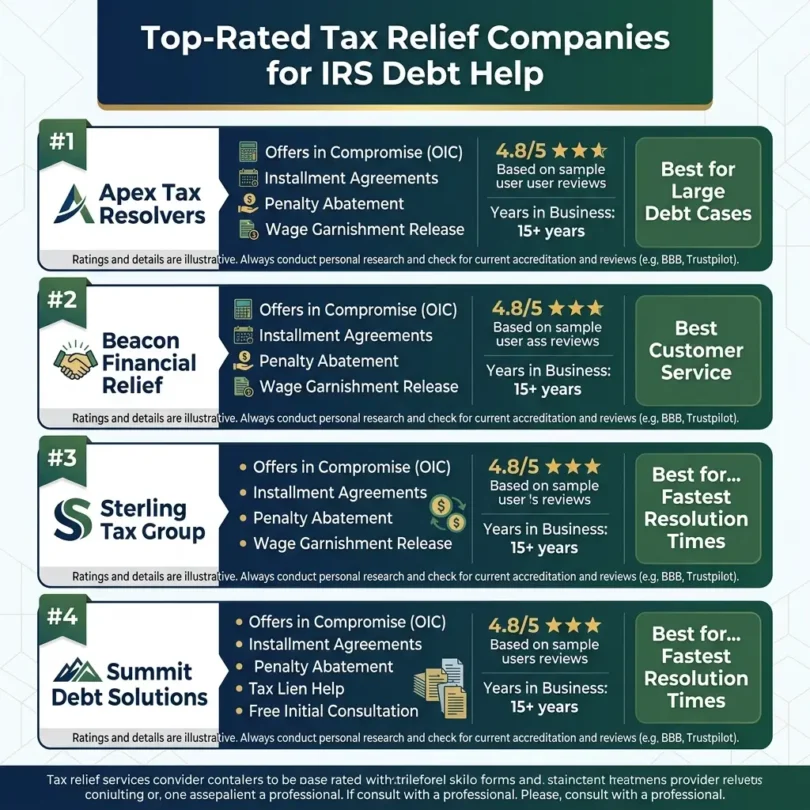
Tax relief companies often advertise that they can help with IRS debt, payment plans, offers in compromise, penalty relief, tax liens, tax levies, wage garnishment, unfiled returns, and settlement options.
Some companies are legitimate and may provide useful help through enrolled agents, CPAs, or tax attorneys. Others use aggressive advertising, unrealistic promises, upfront fees, or misleading “fresh start” language to pressure people who are already stressed.
The IRS says an offer in compromise may allow eligible taxpayers to settle tax debt for less than the full amount owed, but it is generally an option only when paying the full amount would create hardship or when the IRS believes it cannot collect the full amount. (IRS) The IRS also offers payment plans, including short-term plans and long-term installment agreements, for taxpayers who can pay over time. (IRS)
This guide explains how tax relief companies work, what IRS debt options may be available, when to hire a tax professional, how to compare companies, what warning signs to avoid, and what questions to ask before signing any agreement.
Important Disclaimer
This article is for general informational purposes only. It is not legal, tax, accounting, or professional advice.
IRS rules, tax debt options, penalties, interest, collection procedures, state tax rules, attorney fee rules, and settlement outcomes vary by person and situation. Always consult a qualified tax attorney, CPA, enrolled agent, or other licensed professional before making decisions about IRS debt, state tax debt, payroll tax issues, liens, levies, settlement applications, or unfiled returns.
What Is a Tax Relief Company?
A tax relief company is a business that helps taxpayers deal with IRS or state tax problems.
These companies may offer help with:
- IRS tax debt
- State tax debt
- Back taxes
- Unfiled tax returns
- Tax liens
- Tax levies
- Wage garnishment
- Bank account levies
- Payroll tax debt
- Business tax problems
- IRS payment plans
- Installment agreements
- Offers in compromise
- Penalty relief
- Currently not collectible status
- Tax audit support
- IRS notice response
- Tax resolution planning
Some tax relief companies employ or contract with licensed professionals such as:
- Tax attorneys
- Enrolled agents
- Certified public accountants
- Tax preparers
- Case managers
- Resolution specialists
The quality of service can vary widely. That is why careful comparison is important.
Do You Really Need a Tax Relief Company?
Not always.
Many taxpayers can handle simple IRS debt directly with the IRS.
For example, if you filed all required returns and can afford monthly payments, you may be able to apply for an IRS payment plan online. The IRS says online payment options include full payment, a short-term payment plan of 180 days or less, or a long-term payment plan paid monthly. (IRS)
A tax relief company or tax professional may be more useful if:
- You owe a large amount
- You have several years of unfiled returns
- You received lien or levy notices
- Your wages may be garnished
- Your bank account was levied
- You own a business with payroll tax debt
- You cannot afford any monthly payment
- You need an offer in compromise review
- You need penalty relief arguments
- You are facing state tax collection
- You do not understand IRS notices
- You received audit letters
- You have complex income or business records
- You need legal protection or representation
Simple payment plans may not need a company. Complex tax problems often deserve professional review.
IRS Tax Debt Options Tax Relief Companies May Discuss
A good tax relief company should explain options honestly. It should not promise that everyone qualifies for settlement.
Below are common IRS options.
1. IRS Payment Plan or Installment Agreement
An IRS payment plan lets a taxpayer pay owed taxes over time.
The IRS explains that a payment plan is an agreement to pay taxes within an extended timeframe and should be requested if the taxpayer believes they can pay in full over the extended period. (IRS)
IRS online payment options may include:
- Full payment
- Short-term payment plan: 180 days or less
- Long-term payment plan: monthly installment agreement
The IRS says taxpayers may qualify to apply online depending on their specific tax situation. (IRS)
Best For
A payment plan may fit taxpayers who:
- Filed required returns
- Can afford monthly payments
- Want to avoid stronger collection action
- Do not qualify for settlement
- Need time to pay
- Want a structured IRS agreement
Important Warning
Interest and penalties may continue until the balance is fully paid. Also, not paying taxes when due may lead to a Notice of Federal Tax Lien or IRS levy action. (IRS)
2. Offer in Compromise
An Offer in Compromise, often called OIC, is an IRS program that may allow eligible taxpayers to settle tax debt for less than the full amount owed.
The IRS says an offer in compromise may be a legitimate option if a taxpayer cannot pay the full tax debt or doing so would create a hardship. The IRS considers facts such as ability to pay, income, expenses, and asset equity. (IRS)
The Taxpayer Advocate Service explains that submitting an OIC does not guarantee acceptance; the IRS evaluates the taxpayer’s situation, ability to pay, and offered amount. (Taxpayer Advocate Service)
Best For
An OIC may fit taxpayers who:
- Cannot pay the full amount
- Have limited income
- Have limited assets
- Would face hardship paying in full
- Are current with filing requirements
- Are not in an open bankruptcy case
- Can provide detailed information
Important Warning
Many people do not qualify. Be careful with companies that promise “pennies on the dollar” before reviewing your full situation.
3. Currently Not Collectible Status
Currently Not Collectible, also called CNC status, may temporarily delay IRS collection when a taxpayer cannot pay.
The Taxpayer Advocate Service explains that if the IRS agrees a taxpayer cannot pay taxes and basic living expenses, the account may be placed in Currently Not Collectible status. CNC does not erase the tax debt; it temporarily delays collection because the IRS has determined the taxpayer cannot afford to pay at that time. (Taxpayer Advocate Service)
The IRS also says it may temporarily delay collection if it determines the taxpayer cannot pay any tax debt until their condition improves. (IRS)
Best For
CNC may fit taxpayers who:
- Cannot afford basic living expenses and tax payments
- Have temporary hardship
- Have limited income
- Have serious medical or life hardship
- Cannot qualify for an affordable plan right now
Important Warning
CNC does not erase the debt. Penalties and interest may continue, and the IRS may review the account later.
4. Penalty Relief
Penalty relief may be available in some situations.
Taxpayers may ask the IRS to remove or reduce penalties if they qualify under IRS rules, such as reasonable cause or first-time penalty abatement.
A tax professional may help prepare the explanation and supporting documents.
Best For
Penalty relief may fit taxpayers who:
- Have a history of compliance
- Faced serious illness
- Faced natural disaster
- Had death in the family
- Had records destroyed
- Relied on incorrect professional advice
- Had other reasonable cause
Important Warning
Penalty relief is not automatic. Interest may still apply.
5. Tax Lien Help
A federal tax lien is a legal claim against property when taxes are not paid.
Tax relief companies may help taxpayers understand lien withdrawal, release, discharge, subordination, or payment options.
Best For
Lien help may be needed if:
- A lien was filed
- You are selling property
- You are trying to borrow against property
- You need lien release after payment
- You want to understand lien withdrawal options
Important Warning
A lien is serious. Do not ignore IRS lien notices.
6. Tax Levy Help
A levy is when the IRS takes property or rights to property to satisfy tax debt. This may involve wages, bank accounts, or other assets.
Tax relief companies may help communicate with the IRS, request a release, propose a payment option, or challenge the action where appropriate.
Best For
Levy help may be needed if:
- Your wages are being garnished
- Your bank account was levied
- You received final levy notice
- You have urgent hardship
- You need collection appeal review
Important Warning
Levy notices often have deadlines. Speak with a professional quickly.
7. Unfiled Tax Return Help
Many people owe IRS debt because they have unfiled returns.
A tax relief company may help prepare and file missing returns before discussing resolution options.
Best For
This may fit taxpayers who:
- Missed one or more years
- Lost records
- Had business income
- Received IRS substitute return notices
- Need to become compliant before applying for relief
Important Warning
Most IRS resolution options require filing required returns first.
Best Tax Relief Companies: What to Look For
Instead of choosing based on ads, compare companies based on transparency, credentials, reputation, and realistic advice.
1. Licensed Tax Professionals
Look for companies with real professionals, such as:
- Tax attorneys
- CPAs
- Enrolled agents
Ask who will actually work on your case.
Do not accept vague answers like “tax expert” or “specialist” without credentials.
2. Clear Fee Structure
A reputable company should explain:
- Total estimated cost
- What services are included
- Whether fees are flat, hourly, or staged
- Refund policy
- What happens if you do not qualify
- Whether tax preparation is separate
- Whether state tax help is included
- Whether appeals cost extra
The FTC warns consumers not to do business with anyone who tells them to pay the whole fee upfront, and advises asking how the company bills and whether refunds are available if promised service is not provided. (Consumer Advice)
3. Honest Eligibility Review
A good company should review:
- Total tax debt
- Income
- Assets
- Expenses
- Filing status
- Filing compliance
- IRS notices
- Collection status
- Ability to pay
- Business records
- State tax issues
It should not promise an OIC or settlement before reviewing these details.
4. Strong Reputation
Check:
- Better Business Bureau profile
- Consumer reviews
- State attorney general complaints
- FTC enforcement history
- IRS warnings
- Licensing status of professionals
- Company address
- Years in business
- Complaint patterns
- Contract clarity
5. Written Agreement
Always get a written agreement.
It should explain:
- Services provided
- Fees
- Refund policy
- Timeline
- Responsible professional
- Communication process
- Limitations
- What is not included
Tax Relief Company Red Flags
Avoid companies that:
- Guarantee IRS settlement
- Promise “pennies on the dollar” for everyone
- Claim special access to hidden IRS programs
- Demand the entire fee upfront
- Pressure you to sign today
- Refuse to explain fees
- Avoid written contracts
- Say all tax debt can disappear
- Use fake government-sounding names
- Tell you not to contact the IRS
- Promise results without reviewing documents
- Hide who will work on your case
- Refuse to disclose credentials
- Ignore state tax issues
- Have many unresolved complaints
The FTC warned in January 2026 about unexpected calls from fake official-sounding agencies offering to connect people with a “tax resolution officer” for fake IRS liability reduction programs, saying those programs are not real and consumers should hang up. (Consumer Advice)
The IRS also warns that scammers may charge large upfront fees or fees based on refund amounts as part of tax scams. (IRS)
How to Compare Tax Relief Companies
Use this table before choosing.
| Question | Why It Matters |
|---|---|
| Are licensed professionals involved? | Tax debt cases need qualified help |
| Who handles my case? | Avoid anonymous case managers only |
| What IRS option do I likely qualify for? | Prevents false expectations |
| Are fees clear? | Hidden fees create bigger problems |
| Is there a written agreement? | Protects your rights |
| Are results guaranteed? | Guarantees are a red flag |
| Do they review documents first? | Real evaluation needs facts |
| Do they handle state tax issues? | IRS help may not solve state debt |
| Can they help with unfiled returns? | Compliance is often required |
| What is the refund policy? | Important if service is not performed |
Best Tax Relief Option by Situation
If You Can Pay Over Time
Consider an IRS payment plan or installment agreement.
The IRS says payment plans allow taxpayers to pay what they owe within an extended timeframe. (IRS)
If You Cannot Pay Full Balance
Ask about Offer in Compromise eligibility.
The IRS says an OIC may settle tax debt for less than the full amount if the taxpayer cannot pay in full or payment would create hardship. (IRS)
If You Cannot Pay Anything Right Now
Ask about Currently Not Collectible status.
TAS explains CNC can delay collection if the IRS agrees the taxpayer cannot pay taxes and basic living expenses. (Taxpayer Advocate Service)
If You Have Unfiled Returns
File missing returns first or work with a qualified professional to prepare them.
If You Have a Levy or Garnishment
Speak with a tax professional quickly. Collection deadlines can be urgent.
If You Have Business Payroll Tax Debt
Use a tax attorney or highly experienced enrolled agent/CPA. Payroll tax cases can be serious.
Questions to Ask Before Hiring a Tax Relief Company
Ask these questions:
- Are you a tax attorney, CPA, or enrolled agent?
- Who will handle my case?
- What credentials do they have?
- What IRS options may apply to me?
- Do I qualify for an offer in compromise?
- What documents do you need?
- Are all required returns filed?
- Do you handle state tax issues?
- What is your total fee?
- Do you charge upfront?
- What services are included?
- What is not included?
- What is your refund policy?
- Will I get a written agreement?
- How often will I receive updates?
- What if the IRS rejects the application?
- What if I receive levy notice?
- What if I owe payroll taxes?
- Do you guarantee results?
- What should I do next?
A trustworthy company should answer clearly.
Documents You May Need
A tax relief company or professional may ask for:
- IRS notices
- State tax notices
- Tax returns
- Wage statements
- Business records
- Bank statements
- Mortgage or rent information
- Vehicle information
- Income records
- Expense records
- Asset details
- Retirement account information
- Medical expense records
- Levy notices
- Lien notices
- Payroll tax records
- Prior payment plan documents
- Penalty notices
Be honest and complete. Wrong or missing information can harm your case.
Tax Relief Scams: How to Protect Yourself
Follow these safety steps:
- Do not trust surprise calls claiming to be from fake tax agencies
- Do not pay the entire fee upfront
- Do not believe guaranteed settlement promises
- Do not share personal information with unknown callers
- Check official IRS notices yourself
- Use IRS.gov tools before paying a company
- Confirm professional licenses
- Read the contract
- Keep copies of all payments and emails
- Report suspicious companies to the FTC
The FTC says if you have a problem with a tax relief company, report it at ReportFraud.ftc.gov. (Consumer Advice)
Can You Apply for IRS Relief Yourself?
Yes, in many cases.
Taxpayers can use IRS tools to:
- Apply for online payment plans
- Review payment options
- Use the Offer in Compromise Pre-Qualifier
- Request penalty relief
- Respond to notices
- Contact the IRS
- Check balances
However, professional help may be worth considering for complicated cases, large balances, unfiled returns, levies, liens, payroll tax issues, business debts, or legal concerns.
Common Mistakes People Make With IRS Debt
Mistake 1: Ignoring IRS Notices
IRS notices usually include deadlines. Ignoring them can lead to collection action.
Mistake 2: Not Filing Required Returns
You usually need to file required returns before resolving tax debt.
Mistake 3: Believing “Fresh Start” Ads Too Quickly
Some ads make IRS options sound automatic. They are not.
Mistake 4: Paying Large Fees Without a Plan
Do not pay without knowing exactly what service you will receive.
Mistake 5: Assuming Everyone Qualifies for OIC
Offer in compromise approval depends on strict IRS review.
Mistake 6: Not Checking State Tax Debt
State tax agencies may have separate rules and collection powers.
Mistake 7: Missing Levy Deadlines
Levy notices can be urgent. Act quickly.
Mistake 8: Not Keeping Payment Plan Current
Defaulting on a payment plan can restart collection problems.
Mistake 9: Hiding Assets or Income
False information can create serious trouble.
Mistake 10: Hiring Based Only on TV or Online Ads
Advertising does not prove quality.
Final Verdict: Should You Hire a Tax Relief Company?
A tax relief company may help if you have complicated IRS debt, unfiled returns, lien or levy problems, wage garnishment, payroll tax issues, state tax debt, or hardship that requires professional review.
But not everyone needs one.
If your situation is simple and you can pay over time, the IRS online payment plan tool may be enough. If you cannot pay in full, an offer in compromise may be worth reviewing, but it is not guaranteed. If you cannot pay basic living expenses and taxes, Currently Not Collectible status may be an option.
The best tax relief company should provide honest evaluation, licensed professionals, clear fees, written agreements, realistic expectations, and no guaranteed promises.
Avoid companies that demand full upfront payment, guarantee settlement, use fake government language, or promise that everyone qualifies.
Before hiring anyone, check IRS options directly, review credentials, compare fees, and speak with a qualified tax professional if your case is serious.
FAQs About Tax Relief Companies
What is a tax relief company?
A tax relief company helps taxpayers deal with IRS or state tax problems, including tax debt, payment plans, offers in compromise, liens, levies, unfiled returns, and penalty relief.
Are tax relief companies legitimate?
Some are legitimate, but others use misleading promises. The FTC warns consumers not to do business with companies that tell them to pay the whole fee upfront. (Consumer Advice)
What is an offer in compromise?
An offer in compromise is an IRS agreement that may allow eligible taxpayers to settle tax debt for less than the full amount owed. The IRS says it may be an option when a taxpayer cannot pay the full debt or payment would create hardship. (IRS)
Does everyone qualify for an offer in compromise?
No. The Taxpayer Advocate Service explains that submitting an offer does not guarantee acceptance; the IRS evaluates the taxpayer’s situation, ability to pay, and offer amount. (Taxpayer Advocate Service)
What is an IRS payment plan?
An IRS payment plan is an agreement to pay taxes owed within an extended timeframe. The IRS offers short-term and long-term payment options depending on the taxpayer’s situation. (IRS)
What is Currently Not Collectible status?
Currently Not Collectible status may temporarily delay IRS collection if the IRS agrees the taxpayer cannot pay taxes and basic living expenses. It does not erase the tax debt. (Taxpayer Advocate Service)
Can a tax relief company stop wage garnishment?
It may help communicate with the IRS and request available options, but no company can guarantee a result. If wages are being garnished, speak with a qualified tax professional quickly.
Should I pay a tax relief company upfront?
Be careful. The FTC warns consumers not to do business with anyone who says to pay their whole fee upfront. (Consumer Advice)
What should I do if I receive a suspicious tax relief call?
Hang up and verify directly with official IRS resources. The FTC warned in 2026 about fake official-sounding tax relief calls offering fake IRS liability reduction programs. (Consumer Advice)
Can I handle IRS tax debt myself?
Yes, many taxpayers can apply for IRS payment plans or review options directly through IRS.gov. Complex cases may need help from a tax attorney, CPA, or enrolled agent.