
Credit card debt can become stressful very quickly.
A few missed payments can turn into late fees, higher interest, collection calls, damaged credit, and pressure from creditors. Many people start searching for debt relief companies because they feel overwhelmed and want one clear plan to handle credit card balances.
Debt relief companies may claim they can help reduce balances, negotiate with creditors, set up repayment plans, or help consumers get organized. Some companies offer debt settlement. Some connect people with credit counseling. Some help with debt management plans. Others advertise debt consolidation, hardship programs, or negotiation help.
But this is an area where consumers must be careful.
The Consumer Financial Protection Bureau warns that debt settlement companies often charge expensive fees, may encourage consumers to stop paying credit card bills, and some creditors may refuse to work with the company. The CFPB also notes that stopping payments can lead to late fees, penalty interest, more collection efforts, and negative credit impact. (Consumer Financial Protection Bureau)
The Federal Trade Commission warns that debt relief scams often target people with major credit card debt by falsely promising to negotiate debts, charging large upfront fees, and then failing to settle or reduce debts. (Federal Trade Commission)
That does not mean every debt relief option is bad. But it does mean you should compare carefully, understand the risks, avoid upfront-fee scams, and consider safer options such as nonprofit credit counseling before signing up.
This guide explains how debt relief companies work, what to look for, what risks to understand, how to compare providers, what red flags to avoid, and which alternatives may be safer for credit card debt.
Important Disclaimer
This article is for general informational purposes only. It is not legal, tax, credit, debt, or professional advice.
Debt relief options can affect credit, taxes, lawsuits, collection activity, fees, and future borrowing ability. Rules and outcomes vary by location, creditor, debt type, and personal situation. Always speak with a qualified attorney, certified credit counselor, tax professional, or licensed advisor before making major decisions about debt relief.
What Is a Debt Relief Company?
A debt relief company is a business or organization that claims to help consumers manage, reduce, negotiate, or repay debt.
Debt relief services may include:
- Debt settlement
- Debt negotiation
- Credit counseling
- Debt management plans
- Debt consolidation support
- Hardship program guidance
- Budget counseling
- Creditor communication
- Repayment plan setup
Not all debt relief companies work the same way.
Some are nonprofit credit counseling agencies. Others are for-profit settlement companies. Some offer educational counseling. Some charge fees based on enrolled debt or settled debt. Some may advertise aggressive promises that are risky or misleading.
The FTC explains that debt relief services include debt settlement companies that say they can settle debts for less than the full balance. (Federal Trade Commission)
Debt Relief vs Debt Settlement vs Credit Counseling
These terms are often mixed together, but they are different.
| Option | What It Means | Main Risk | Best For |
|---|---|---|---|
| Debt relief | Broad term for help with debt | Varies by program | People exploring options |
| Debt settlement | Company negotiates for less than full balance | Credit damage, fees, lawsuits, taxes | People already seriously behind |
| Credit counseling | Counselor reviews budget and options | Quality varies | People needing guidance |
| Debt management plan | Nonprofit agency helps repay debts through one plan | Requires regular payment discipline | People who can repay over time |
| Debt consolidation | Combines debts into one payment | May require good credit or collateral | People who qualify for better terms |
A debt management plan is not a loan. The National Foundation for Credit Counseling explains that a Debt Management Plan is a tool offered by nonprofit credit counseling agencies to help people get back on the path toward becoming debt-free. (NFCC)
Best Debt Relief Companies: What to Compare
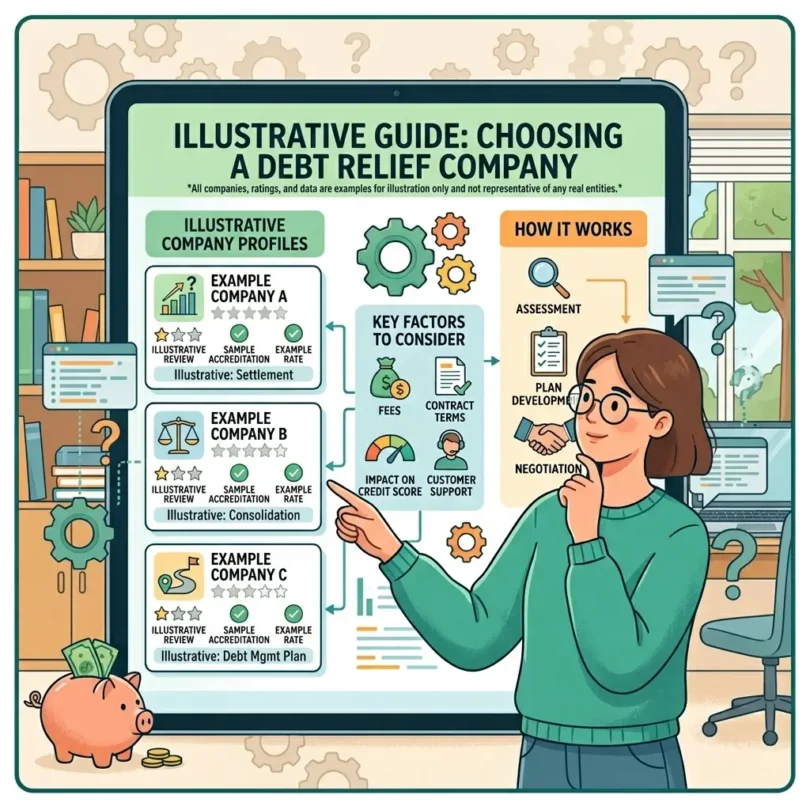
Instead of blindly trusting advertisements, compare companies by category, transparency, fees, reputation, and risk.
Below are the main types of providers to consider.
1. Nonprofit Credit Counseling Agencies
Best for: People who want safer guidance before choosing a risky option
Good for: Credit card debt, budgeting help, debt management plans
Main strength: Counseling, education, structured repayment help
Nonprofit credit counseling agencies can help consumers review income, expenses, debts, and repayment options. Some may offer debt management plans, where the agency works with creditors to create a structured repayment plan.
The NFCC says a Debt Management Plan through nonprofit credit counselors can help lower interest rates, provide one monthly payment, stop collection calls, and avoid hidden fees. (NFCC)
Why This Option May Be Safer
A nonprofit counseling agency may help you understand your options before you make a major decision. It may also help you repay enrolled debts in full through a debt management plan instead of trying to settle for less than the full balance.
Best Fit
This option may fit people who still have income and want a structured way to repay credit card debt without high-risk settlement tactics.
What to Ask
- Are you a nonprofit agency?
- Are counselors certified?
- What fees apply?
- Is this a debt management plan or settlement?
- Will creditors reduce interest?
- How long will the plan take?
- Will my accounts be closed?
- How will this affect credit?
- What happens if I miss a plan payment?
2. Debt Management Plan Providers
Best for: People who can repay debt but need lower interest and one organized payment
Good for: Credit card debt, collection calls, multiple accounts
Main strength: Structured repayment through a counseling agency
A Debt Management Plan, or DMP, is usually offered through nonprofit credit counseling agencies. The agency may work with creditors to reduce interest rates, waive certain fees, and combine multiple payments into one monthly plan.
Money Management International describes a DMP as a plan where the agency works with creditors to negotiate reduced interest rates while the consumer pays debts in full over time. (Money Management)
Why This Option May Help
A DMP may help if you are struggling with high credit card interest but still want to repay debt in an organized way.
Best Fit
A DMP may fit people who:
- Have steady income
- Can afford a monthly plan
- Want to avoid settlement risk
- Need help with high interest rates
- Want one organized payment
- Prefer nonprofit counseling support
Possible Downsides
A DMP may require closing credit card accounts, sticking to a strict payment plan, and paying monthly program fees. It may not help with all debt types.
3. Debt Settlement Companies
Best for: People already in serious hardship who understand the risks
Good for: Some unsecured credit card debt
Main strength: Negotiating reduced payoff amounts in some cases
Debt settlement companies try to negotiate with creditors for less than the full balance.
This sounds attractive, but it can be risky.
The CFPB warns that debt settlement companies often charge expensive fees, may tell consumers to stop paying credit card bills, and some creditors may refuse to work with them. If payments stop, late fees, penalty interest, collection activity, lawsuits, and credit damage may follow. (Consumer Financial Protection Bureau)
Why This Option Is Risky
Debt settlement may involve:
- Stopping payments
- Growing balances from fees and interest
- Collection calls
- Lawsuit risk
- Credit score damage
- No guarantee all debts settle
- Fees charged after settlements
- Possible tax issues on forgiven debt
- Creditor refusal
Best Fit
Debt settlement may only make sense for people who are already seriously behind, cannot maintain regular payments, understand risks clearly, and have spoken with a qualified professional.
What to Ask
- Are you asking me to stop paying creditors?
- What happens if I am sued?
- What fees do you charge?
- When do you charge fees?
- Are upfront fees prohibited?
- What percentage of clients complete the program?
- What happens if creditors refuse settlement?
- Will I owe taxes on forgiven debt?
- How will this affect credit?
- Can I cancel?
4. Debt Consolidation Support Services
Best for: People who qualify for one lower-cost repayment option
Good for: Multiple credit card balances
Main strength: Combining payments into one
Debt consolidation means combining multiple debts into one payment, often through a personal loan, balance transfer, or other repayment product.
A debt relief company may explain this option, but you should be careful with any company that charges large fees or promises guaranteed approval.
Best Fit
Debt consolidation may fit people who:
- Have stable income
- Qualify for better terms
- Can avoid adding new credit card debt
- Want one payment
- Want a clear payoff timeline
Possible Downsides
If the new payment is not affordable or the person keeps using credit cards, debt can grow again.
5. Attorney-Based Debt Help
Best for: People facing lawsuits, judgments, wage garnishment, or legal threats
Good for: Debt collection lawsuits, settlement negotiation, bankruptcy review
Main strength: Legal protection and court guidance
Some people need legal help, not just a debt relief company.
Consider speaking with an attorney if:
- You were sued by a creditor
- You received court papers
- A judgment was entered
- Your wages may be garnished
- A creditor threatens legal action
- You are considering bankruptcy
- Debt collectors may be violating your rights
- You do not understand settlement documents
The CFPB provides resources to help people understand debt collection and their rights. (Consumer Financial Protection Bureau)
How to Choose the Best Debt Relief Company
Use this checklist before signing up.
1. Confirm the Type of Service
Ask clearly:
- Is this credit counseling?
- Is this a debt management plan?
- Is this debt settlement?
- Is this a loan?
- Is this legal representation?
- Is this only education?
Many companies use similar marketing language, so you must understand exactly what you are buying.
2. Check Fee Transparency
A trustworthy provider should explain fees clearly before enrollment.
Ask:
- What fees do you charge?
- When do you charge fees?
- Are there monthly fees?
- Are there setup fees?
- Are there settlement fees?
- Are fees based on total enrolled debt or saved amount?
- Are fees refundable?
- Will I get a written agreement?
The FTC’s debt relief rule prohibits certain for-profit debt relief companies that use telemarketing from charging fees before they have actually settled or reduced at least one debt and the consumer has made at least one payment under the settlement agreement. (Federal Trade Commission)
3. Avoid Upfront-Fee Promises
Be very careful if a company asks for large upfront fees before doing anything useful.
The FTC warns that many debt relief scams charge cash-strapped consumers large upfront fees but fail to help settle or lower debts. (Federal Trade Commission)
4. Check Accreditation and Reputation
Look for:
- Nonprofit status, if claimed
- NFCC membership, if relevant
- State licensing where required
- Better Business Bureau profile
- Consumer complaints
- Attorney general warnings
- CFPB complaint history
- FTC enforcement history
- Transparent business address
- Clear contracts
- Realistic claims
The U.S. Trustee Program provides a list of approved credit counseling agencies for bankruptcy-related counseling requirements, which can be useful for people checking legitimate counseling resources. (Department of Justice)
5. Understand Credit Impact
Debt settlement can hurt credit. Missed payments can stay on credit reports. Settled accounts may also affect future borrowing ability.
A debt management plan may also affect accounts, especially if cards are closed, but it may be less damaging than intentionally stopping payments.
Always ask how the option may affect credit reports and future borrowing.
6. Ask About Lawsuit Risk
If a debt settlement company tells you to stop paying creditors, ask what happens if a creditor sues.
Ask:
- Do you provide legal defense?
- What if I receive court papers?
- Do I need a lawyer?
- Is lawsuit risk included in your explanation?
- What happens if judgment is entered?
- Could wages be garnished where I live?
Do not ignore court papers.
7. Ask About Tax Issues
Settled or forgiven debt may sometimes be treated as taxable income, depending on the situation and local law.
Ask a qualified tax professional before accepting settlement.
Red Flags of Debt Relief Scams
Avoid companies that:
- Guarantee they can erase debt
- Promise results before reviewing your situation
- Demand large upfront fees
- Pressure you to sign immediately
- Tell you to stop communicating with creditors without explaining risks
- Claim a secret government program
- Refuse to explain fees
- Avoid written contracts
- Tell you lawsuits are impossible
- Promise credit repair overnight
- Use robocalls or aggressive sales tactics
- Claim nonprofit status without proof
- Tell you not to read the agreement
- Hide company address or licensing
- Have many unresolved complaints
The CFPB and seven state attorneys general sued a debt-relief enterprise in 2024, alleging it collected hundreds of millions of dollars in illegal fees from vulnerable consumers. (Consumer Financial Protection Bureau)
Debt Relief Company Comparison Checklist
Before choosing a company, compare these points:
| Question | Why It Matters |
|---|---|
| Is it nonprofit or for-profit? | Different goals and fee structures |
| Is it counseling, DMP, settlement, or loan support? | Services are very different |
| Are fees clear? | Hidden fees can make hardship worse |
| Are upfront fees requested? | Major warning sign in many cases |
| Are results guaranteed? | No company can guarantee creditor cooperation |
| Are risks explained? | Honest providers disclose credit and lawsuit risks |
| Is there accreditation? | Helps verify legitimacy |
| Are complaints common? | Reputation matters |
| Is there a written agreement? | Protects the consumer |
| Can you cancel? | Important before signing |
Debt Relief Options for Credit Card Debt
Option 1: Call Credit Card Issuer Directly
Before hiring a company, you may contact the card issuer and ask about hardship options.
Possible options may include:
- Temporary lower payment
- Lower interest hardship plan
- Fee waiver
- Payment pause
- Internal repayment plan
- Settlement offer, depending on status
Get everything in writing.
Option 2: Nonprofit Credit Counseling
A certified counselor may review your full situation and explain options.
This is often a safer starting point.
Option 3: Debt Management Plan
A DMP may help organize repayment and reduce interest through a nonprofit counseling agency.
Option 4: Debt Settlement
Debt settlement may reduce balances in some cases but can create serious risks.
Option 5: Legal Help
If you are sued or facing court action, speak with an attorney.
Option 6: Bankruptcy Review
Bankruptcy is a legal process and should be reviewed with a qualified attorney. It may be an option for people whose debt burden is impossible to manage, but it has serious consequences and rules.
What to Do Before Signing Up
Before signing any debt relief agreement:
- Read every page.
- Ask when fees are charged.
- Ask whether payments to creditors will stop.
- Ask what happens if creditors sue.
- Ask whether all creditors participate.
- Ask about credit impact.
- Ask about tax consequences.
- Ask whether the company is licensed where required.
- Check complaints and enforcement history.
- Speak with a nonprofit counselor or attorney if unsure.
What If You Are Already in a Debt Relief Program?
If you already joined a program and feel something is wrong:
- Review your contract
- Check whether fees were charged early
- Ask for a full account statement
- Contact creditors directly to verify status
- Save all emails and documents
- Check whether lawsuits were filed
- Speak with a qualified attorney or counselor
- File a complaint with consumer protection agencies if needed
Do not ignore collection letters or court notices.
Best Debt Relief Company Qualities
A trustworthy company should:
- Explain all options
- Disclose risks clearly
- Avoid guarantees
- Provide written agreements
- Explain fees before enrollment
- Avoid illegal upfront fees
- Encourage informed decisions
- Provide realistic timelines
- Explain credit impact
- Explain lawsuit risk
- Recommend legal help when needed
- Have clear contact information
- Have strong consumer reviews
- Have minimal complaint patterns
Common Mistakes People Make With Credit Card Debt Relief
Mistake 1: Believing Guaranteed Results
No company can force every creditor to settle.
Mistake 2: Paying Large Upfront Fees
This is a major scam warning sign.
Mistake 3: Stopping Payments Without Understanding Risk
This can lead to fees, collections, lawsuits, and credit damage.
Mistake 4: Ignoring Lawsuit Papers
Court deadlines matter. Do not ignore them.
Mistake 5: Not Checking Nonprofit Counseling First
A DMP may be safer for some people.
Mistake 6: Not Reading the Contract
The agreement controls fees, cancellation, and obligations.
Mistake 7: Not Asking About Taxes
Forgiven debt may create tax issues.
Mistake 8: Choosing Based on Ads Only
High-pressure ads do not prove quality.
Mistake 9: Adding New Debt During the Program
New debt can make recovery harder.
Mistake 10: Waiting Until Accounts Are in Court
Early advice gives more options.
Final Verdict: Should You Use a Debt Relief Company?
Debt relief companies can be helpful in some situations, but they can also create serious risk if you choose the wrong provider or misunderstand the program.
For many people with credit card debt, the safer first step is nonprofit credit counseling. A certified counselor can explain whether a debt management plan, hardship plan, direct creditor negotiation, legal help, or another option makes sense.
Debt settlement should be approached carefully. It may reduce balances in some cases, but it can also lead to credit damage, collection activity, lawsuits, fees, and tax issues. The CFPB warns that some creditors may refuse to work with settlement companies and that stopping payments can cause late fees, penalty interest, and collection efforts. (Consumer Financial Protection Bureau)
The best debt relief company is not the one that promises the fastest result. It is the one that explains risks honestly, discloses fees clearly, avoids illegal upfront charges, provides a written agreement, has strong reputation checks, and helps you make an informed decision.
Before signing anything, compare options, read the contract, check complaints, and speak with a qualified professional if you are unsure.
FAQs About Debt Relief Companies
What is a debt relief company?
A debt relief company is a business or organization that claims to help consumers manage, reduce, negotiate, or repay debt. Services may include credit counseling, debt management plans, settlement negotiation, or repayment planning.
Are debt relief companies safe?
Some are legitimate, but others may be risky or deceptive. The FTC warns that debt relief scams often charge large upfront fees and fail to settle or reduce debts. (Federal Trade Commission)
What is the best debt relief option for credit card debt?
It depends on the situation. Nonprofit credit counseling and debt management plans may be safer starting points for people who can repay over time. Debt settlement may be riskier and should be considered carefully.
What is a debt management plan?
The NFCC explains that a Debt Management Plan is a tool offered by nonprofit credit counseling agencies to help people get on the path toward becoming debt-free; it is not a loan. (NFCC)
Do debt settlement companies charge upfront fees?
Certain for-profit debt relief companies using telemarketing are prohibited under FTC rules from charging fees before they settle or reduce at least one debt and the consumer makes a payment under the settlement. (Federal Trade Commission)
Can debt settlement hurt credit?
Yes. The CFPB warns that debt settlement companies may encourage consumers to stop paying bills, which can lead to late fees, penalty interest, collection activity, and negative credit impact. (Consumer Financial Protection Bureau)
Can creditors refuse to work with a debt settlement company?
Yes. The CFPB states that some creditors may refuse to work with the company a consumer chooses. (Consumer Financial Protection Bureau)
Should I stop paying credit cards if a debt relief company tells me to?
Do not stop paying without understanding the risks. Missed payments can lead to fees, collection efforts, lawsuits, and credit damage. Speak with a qualified professional before making that decision.
Where can I find nonprofit credit counseling?
The NFCC connects consumers with nonprofit credit counselors and describes debt management plans as a safer, less costly way to pay down debt in many cases. (NFCC)
What should I do if I was sued over credit card debt?
Do not ignore court papers. Speak with a qualified attorney immediately and review CFPB resources about debt collection rights. (Consumer Financial Protection Bureau)